
popular news & articles
 Customer retention is ultimately driven by value. Even the best segmentation, targeting, positioning, creative messaging or promotion with flawless execution will fall flat in the absence of value. In developing a plan to maintain and upgrade a customer base it is necessary then to build on solid foundation. Then, and only then will the steps unlock the door to greater customer retention and overall organizational success.
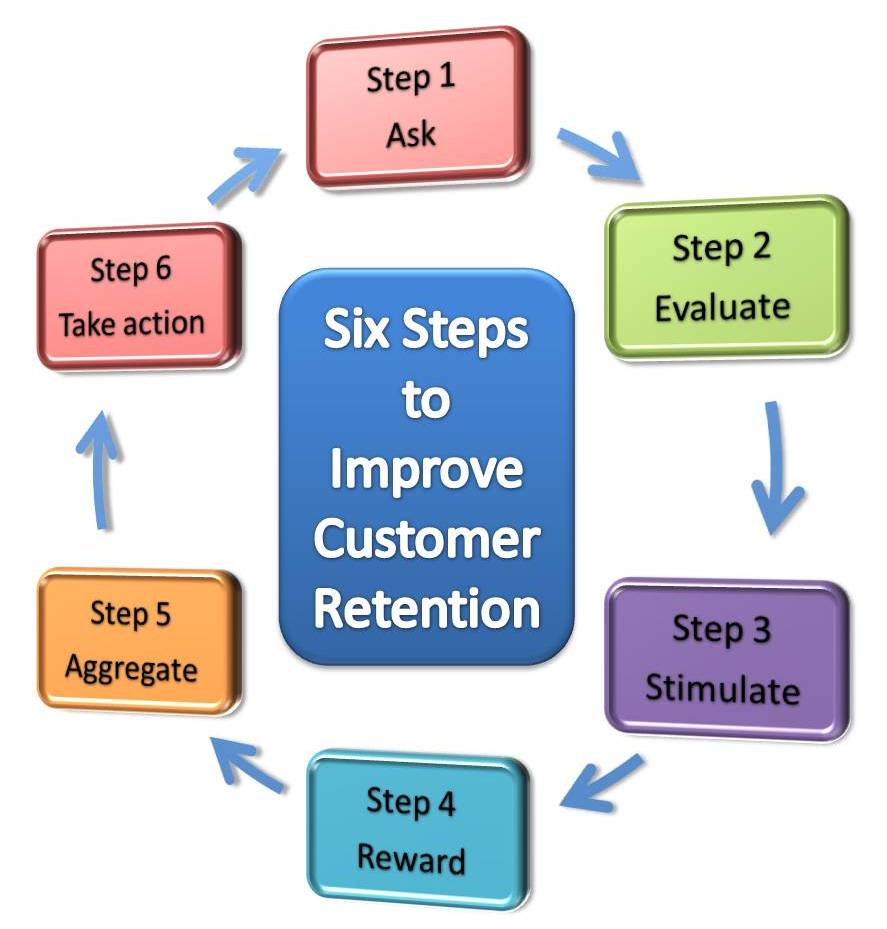
To succeed, customer retention must be a top-down, company-wide initiative. Truly committing to customer retention is hard work, because it affects virtually every aspect of your organization. But the ultimate payback in sustainable growth and profitability makes the effort worthwhile. The path to customer retention involves six key steps.
Step 1 Ask – Ask your customers what they want, what they like and don’t like. Include customer surveys on your Web site, at point-of-sale and in package inserts. You’ll likely get “extreme” feedback from customers who either love you or hate you. Customers who are mildly satisfied are not as motivated to speak their minds. But only ask if you’re prepared to deal with the responses. Turning a deaf ear to a problem is the kiss of death. Please remember that customers expect you to take action when they complain, especially if you initiated the dialog. Use feedback from your surveys to make improvements to your product or service. Customers love it when you listen to them!
Step 2 Evaluate – Evaluate your customer data to find out who your best customers are. This may sound like a big “duh”, but the devil is in the details. There may be trends that you’ve overlooked. And keep an eye on profitability, not just transactions. In the credit card world, a deep spender who pays off his balance each month is usually not as profitable as a moderate spender who carries a balance. When you know who your best customers are, you can tailor your marketing programs to keep those customers and encourage them to spend more with you.
Step 3 Stimulate – If you have sold your customer a service and they’re not using it, get them to activate. Examples: online bill pay; long-distance service; credit and debit cards. At the start of a new relationship, there’s that warm and fuzzy feeling when a customer signs on. You got them to say “yes.” Four months later you’re wondering why your customer doesn’t love you. Is it something you did? No. It’s something you didn’t do. You sold them and moved on. You assumed that the customer would fend for himself and figure out all the great things about doing business with you. The first few days/weeks of a new business relationship are critical. Shower them your kindness. Send direct mail and e-mail reminders. Thank them for their business. Do everything you can to make the “honeymoon” phase of your relationship special. In the long run, if they’re not using your product or service, they’re likely to bail when a better deal comes along.
Step 4 Reward – Reward your customers with meaningful perks for doing business with you. It seems like everyone has a loyalty program these days. Customers are getting weary of “me too” programs that don’t offer substantial value. Instead of always giving customers what they expect, give them the unexpected. For example, a mid size accounting firm rewarded some of its best customers a box of Haigh chocolates for their continued business. It was an unexpected tasty little perk that came out of the blue. Results? These customers had above average retention rates the following year. Sometimes the little things can mean a lot.
Step 5 Aggregate – Try to get all the customer’s eggs in your basket. In other words, cross-sell other products and services. It’s much easier because you already have a relationship with these customers. Offer “one-stop shopping”, consolidated billing, free postage and other benefits for giving you more of their business. Everyone’s busy, and consumers are looking for service providers who can make their lives easier. It’s what they want, so why not give it to them?
Step 6 Take action – Having a great product and great customer service are the foundation for customer retention. And positive word of mouth is by far the best marketing tool in your arsenal. But you can’t control when that happens, so you need a marketing plan to keep the customers you want. Don’t just hope your customers love you – be proactive. Put your plan in writing and make it stick. Follow through and take action. Use direct mail, e-mail, newsletters and other marketing tools to make your best customers feel special.
Treat your best customers with respect and they’ll reward you with loyalty beyond your wildest dreams. Send them targeted messages. Give them special incentives. Keep in mind that it’s easier to cultivate your existing customer relationships than to begin new ones. Not to mention less expensive.
The role of customer retention in the overall organizational strategy is one of protecting and managing the primary source of resources. It is also one of defending and enhancing market position and of optimizing resources and opportunity.
That is why although seemingly a purely tactical approach, customer retention also belongs to the realm of strategic market planning and is a required strength inherent to any successful organization.
It costs about five times as much to acquire a new customer as it does to keep a current customer. That’s why it pays to pay attention to your best customers. In the end, they’ll buy more, stick with you longer, and tell their friends how great it is doing business with your company. Isn’t that what we all want?
Customer retention is ultimately driven by value. Even the best segmentation, targeting, positioning, creative messaging or promotion with flawless execution will fall flat in the absence of value. In developing a plan to maintain and upgrade a customer base it is necessary then to build on solid foundation. Then, and only then will the steps unlock the door to greater customer retention and overall organizational success.
To succeed, customer retention must be a top-down, company-wide initiative. Truly committing to customer retention is hard work, because it affects virtually every aspect of your organization. But the ultimate payback in sustainable growth and profitability makes the effort worthwhile. The path to customer retention involves six key steps.
Step 1 Ask – Ask your customers what they want, what they like and don’t like. Include customer surveys on your Web site, at point-of-sale and in package inserts. You’ll likely get “extreme” feedback from customers who either love you or hate you. Customers who are mildly satisfied are not as motivated to speak their minds. But only ask if you’re prepared to deal with the responses. Turning a deaf ear to a problem is the kiss of death. Please remember that customers expect you to take action when they complain, especially if you initiated the dialog. Use feedback from your surveys to make improvements to your product or service. Customers love it when you listen to them!
Step 2 Evaluate – Evaluate your customer data to find out who your best customers are. This may sound like a big “duh”, but the devil is in the details. There may be trends that you’ve overlooked. And keep an eye on profitability, not just transactions. In the credit card world, a deep spender who pays off his balance each month is usually not as profitable as a moderate spender who carries a balance. When you know who your best customers are, you can tailor your marketing programs to keep those customers and encourage them to spend more with you.
Step 3 Stimulate – If you have sold your customer a service and they’re not using it, get them to activate. Examples: online bill pay; long-distance service; credit and debit cards. At the start of a new relationship, there’s that warm and fuzzy feeling when a customer signs on. You got them to say “yes.” Four months later you’re wondering why your customer doesn’t love you. Is it something you did? No. It’s something you didn’t do. You sold them and moved on. You assumed that the customer would fend for himself and figure out all the great things about doing business with you. The first few days/weeks of a new business relationship are critical. Shower them your kindness. Send direct mail and e-mail reminders. Thank them for their business. Do everything you can to make the “honeymoon” phase of your relationship special. In the long run, if they’re not using your product or service, they’re likely to bail when a better deal comes along.
Step 4 Reward – Reward your customers with meaningful perks for doing business with you. It seems like everyone has a loyalty program these days. Customers are getting weary of “me too” programs that don’t offer substantial value. Instead of always giving customers what they expect, give them the unexpected. For example, a mid size accounting firm rewarded some of its best customers a box of Haigh chocolates for their continued business. It was an unexpected tasty little perk that came out of the blue. Results? These customers had above average retention rates the following year. Sometimes the little things can mean a lot.
Step 5 Aggregate – Try to get all the customer’s eggs in your basket. In other words, cross-sell other products and services. It’s much easier because you already have a relationship with these customers. Offer “one-stop shopping”, consolidated billing, free postage and other benefits for giving you more of their business. Everyone’s busy, and consumers are looking for service providers who can make their lives easier. It’s what they want, so why not give it to them?
Step 6 Take action – Having a great product and great customer service are the foundation for customer retention. And positive word of mouth is by far the best marketing tool in your arsenal. But you can’t control when that happens, so you need a marketing plan to keep the customers you want. Don’t just hope your customers love you – be proactive. Put your plan in writing and make it stick. Follow through and take action. Use direct mail, e-mail, newsletters and other marketing tools to make your best customers feel special.
Treat your best customers with respect and they’ll reward you with loyalty beyond your wildest dreams. Send them targeted messages. Give them special incentives. Keep in mind that it’s easier to cultivate your existing customer relationships than to begin new ones. Not to mention less expensive.
The role of customer retention in the overall organizational strategy is one of protecting and managing the primary source of resources. It is also one of defending and enhancing market position and of optimizing resources and opportunity.
That is why although seemingly a purely tactical approach, customer retention also belongs to the realm of strategic market planning and is a required strength inherent to any successful organization.
It costs about five times as much to acquire a new customer as it does to keep a current customer. That’s why it pays to pay attention to your best customers. In the end, they’ll buy more, stick with you longer, and tell their friends how great it is doing business with your company. Isn’t that what we all want?
Customer retention is ultimately driven by value. Even the best segmentation, targeting, positioning, creative messaging or promotion with flawless execution will fall flat in the absence of value. In developing a plan to maintain and upgrade a customer base it is necessary then to build on solid foundation. Then, and only then will the steps unlock the door to greater customer retention and overall organizational success.
To succeed, customer retention must be a top-down, company-wide initiative. Truly committing to customer retention is hard work, because it affects virtually every aspect of your organization. But the ultimate payback in sustainable growth and profitability makes the effort worthwhile. The path to customer retention involves six key steps.
Step 1 Ask – Ask your customers what they want, what they like and don’t like. Include customer surveys on your Web site, at point-of-sale and in package inserts. You’ll likely get “extreme” feedback from customers who either love you or hate you. Customers who are mildly satisfied are not as motivated to speak their minds. But only ask if you’re prepared to deal with the responses. Turning a deaf ear to a problem is the kiss of death. Please remember that customers expect you to take action when they complain, especially if you initiated the dialog. Use feedback from your surveys to make improvements to your product or service. Customers love it when you listen to them!
Step 2 Evaluate – Evaluate your customer data to find out who your best customers are. This may sound like a big “duh”, but the devil is in the details. There may be trends that you’ve overlooked. And keep an eye on profitability, not just transactions. In the credit card world, a deep spender who pays off his balance each month is usually not as profitable as a moderate spender who carries a balance. When you know who your best customers are, you can tailor your marketing programs to keep those customers and encourage them to spend more with you.
Step 3 Stimulate – If you have sold your customer a service and they’re not using it, get them to activate. Examples: online bill pay; long-distance service; credit and debit cards. At the start of a new relationship, there’s that warm and fuzzy feeling when a customer signs on. You got them to say “yes.” Four months later you’re wondering why your customer doesn’t love you. Is it something you did? No. It’s something you didn’t do. You sold them and moved on. You assumed that the customer would fend for himself and figure out all the great things about doing business with you. The first few days/weeks of a new business relationship are critical. Shower them your kindness. Send direct mail and e-mail reminders. Thank them for their business. Do everything you can to make the “honeymoon” phase of your relationship special. In the long run, if they’re not using your product or service, they’re likely to bail when a better deal comes along.
Step 4 Reward – Reward your customers with meaningful perks for doing business with you. It seems like everyone has a loyalty program these days. Customers are getting weary of “me too” programs that don’t offer substantial value. Instead of always giving customers what they expect, give them the unexpected. For example, a mid size accounting firm rewarded some of its best customers a box of Haigh chocolates for their continued business. It was an unexpected tasty little perk that came out of the blue. Results? These customers had above average retention rates the following year. Sometimes the little things can mean a lot.
Step 5 Aggregate – Try to get all the customer’s eggs in your basket. In other words, cross-sell other products and services. It’s much easier because you already have a relationship with these customers. Offer “one-stop shopping”, consolidated billing, free postage and other benefits for giving you more of their business. Everyone’s busy, and consumers are looking for service providers who can make their lives easier. It’s what they want, so why not give it to them?
Step 6 Take action – Having a great product and great customer service are the foundation for customer retention. And positive word of mouth is by far the best marketing tool in your arsenal. But you can’t control when that happens, so you need a marketing plan to keep the customers you want. Don’t just hope your customers love you – be proactive. Put your plan in writing and make it stick. Follow through and take action. Use direct mail, e-mail, newsletters and other marketing tools to make your best customers feel special.
Treat your best customers with respect and they’ll reward you with loyalty beyond your wildest dreams. Send them targeted messages. Give them special incentives. Keep in mind that it’s easier to cultivate your existing customer relationships than to begin new ones. Not to mention less expensive.
The role of customer retention in the overall organizational strategy is one of protecting and managing the primary source of resources. It is also one of defending and enhancing market position and of optimizing resources and opportunity.
That is why although seemingly a purely tactical approach, customer retention also belongs to the realm of strategic market planning and is a required strength inherent to any successful organization.
It costs about five times as much to acquire a new customer as it does to keep a current customer. That’s why it pays to pay attention to your best customers. In the end, they’ll buy more, stick with you longer, and tell their friends how great it is doing business with your company. Isn’t that what we all want?
Customer retention is ultimately driven by value. Even the best segmentation, targeting, positioning, creative messaging or promotion with flawless execution will fall flat in the absence of value. In developing a plan to maintain and upgrade a customer base it is necessary then to build on solid foundation. Then, and only then will the steps unlock the door to greater customer retention and overall organizational success.
To succeed, customer retention must be a top-down, company-wide initiative. Truly committing to customer retention is hard work, because it affects virtually every aspect of your organization. But the ultimate payback in sustainable growth and profitability makes the effort worthwhile. The path to customer retention involves six key steps.
Step 1 Ask – Ask your customers what they want, what they like and don’t like. Include customer surveys on your Web site, at point-of-sale and in package inserts. You’ll likely get “extreme” feedback from customers who either love you or hate you. Customers who are mildly satisfied are not as motivated to speak their minds. But only ask if you’re prepared to deal with the responses. Turning a deaf ear to a problem is the kiss of death. Please remember that customers expect you to take action when they complain, especially if you initiated the dialog. Use feedback from your surveys to make improvements to your product or service. Customers love it when you listen to them!
Step 2 Evaluate – Evaluate your customer data to find out who your best customers are. This may sound like a big “duh”, but the devil is in the details. There may be trends that you’ve overlooked. And keep an eye on profitability, not just transactions. In the credit card world, a deep spender who pays off his balance each month is usually not as profitable as a moderate spender who carries a balance. When you know who your best customers are, you can tailor your marketing programs to keep those customers and encourage them to spend more with you.
Step 3 Stimulate – If you have sold your customer a service and they’re not using it, get them to activate. Examples: online bill pay; long-distance service; credit and debit cards. At the start of a new relationship, there’s that warm and fuzzy feeling when a customer signs on. You got them to say “yes.” Four months later you’re wondering why your customer doesn’t love you. Is it something you did? No. It’s something you didn’t do. You sold them and moved on. You assumed that the customer would fend for himself and figure out all the great things about doing business with you. The first few days/weeks of a new business relationship are critical. Shower them your kindness. Send direct mail and e-mail reminders. Thank them for their business. Do everything you can to make the “honeymoon” phase of your relationship special. In the long run, if they’re not using your product or service, they’re likely to bail when a better deal comes along.
Step 4 Reward – Reward your customers with meaningful perks for doing business with you. It seems like everyone has a loyalty program these days. Customers are getting weary of “me too” programs that don’t offer substantial value. Instead of always giving customers what they expect, give them the unexpected. For example, a mid size accounting firm rewarded some of its best customers a box of Haigh chocolates for their continued business. It was an unexpected tasty little perk that came out of the blue. Results? These customers had above average retention rates the following year. Sometimes the little things can mean a lot.
Step 5 Aggregate – Try to get all the customer’s eggs in your basket. In other words, cross-sell other products and services. It’s much easier because you already have a relationship with these customers. Offer “one-stop shopping”, consolidated billing, free postage and other benefits for giving you more of their business. Everyone’s busy, and consumers are looking for service providers who can make their lives easier. It’s what they want, so why not give it to them?
Step 6 Take action – Having a great product and great customer service are the foundation for customer retention. And positive word of mouth is by far the best marketing tool in your arsenal. But you can’t control when that happens, so you need a marketing plan to keep the customers you want. Don’t just hope your customers love you – be proactive. Put your plan in writing and make it stick. Follow through and take action. Use direct mail, e-mail, newsletters and other marketing tools to make your best customers feel special.
Treat your best customers with respect and they’ll reward you with loyalty beyond your wildest dreams. Send them targeted messages. Give them special incentives. Keep in mind that it’s easier to cultivate your existing customer relationships than to begin new ones. Not to mention less expensive.
The role of customer retention in the overall organizational strategy is one of protecting and managing the primary source of resources. It is also one of defending and enhancing market position and of optimizing resources and opportunity.
That is why although seemingly a purely tactical approach, customer retention also belongs to the realm of strategic market planning and is a required strength inherent to any successful organization.
It costs about five times as much to acquire a new customer as it does to keep a current customer. That’s why it pays to pay attention to your best customers. In the end, they’ll buy more, stick with you longer, and tell their friends how great it is doing business with your company. Isn’t that what we all want?
weekly popular
lets see
latest video
editor’s pick

Optus head of marketing Cam Luby is leaving the telco to become Lyka’s first Chief Marketing Officer in early 2026, as the fast-growing fresh pet-food brand looks to become a household name in Australian pet wellness. #Lyka #CamLuby #CMO #PetWellness #Loyalty

Some brands survive crises with barely a scratch, while others are punished for years. The difference isn’t the mistake itself, but how customers interpret intent, character, and consistency. This article explores why customers forgive some brands instantly and punish others forever, using examples from #Airbnb, #Everlane, #Peloton, #UberEats, #Deliveroo, #Etsy, #Costco and #Aldi to show how expectation, identity, and trust shape judgement. Understanding #BrandPsychology and #CustomerTrust reveals why apologies alone don’t create forgiveness, and why long-term loyalty depends on belief, not perfection. #ConsumerBehaviour #BrandReputation

#MarksandSpencer and other UK retailers are treating #TikTokShop as a serious retail channel. Live selling is no longer a gimmick, it is a new route to #acquisition and habit.
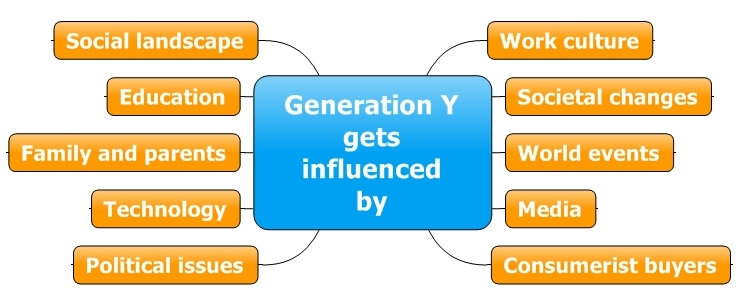
It takes more than selective targeting to market effectively to Generation Y. Members of Generation Y seeks products that create an ambiance and community experience, rather than just provide a function. They like brands to express a reality in which they are involved, interconnected, and interactive. To be successful, build a brand with them, not for them. Computers have made knowledge cool through a fusion of fun and learning. Merchandise concepts that make exploring the unknown fun, bring information to life, or challenge consumers to design their own products will be a sure-fire hit. Also, look for cause-related tie-ins, lifestyle sponsorships, interactive promotions, etc. to become more means by which brands can provide memorable experiences and build community. Some very large brands are struggling to learn these lessons. Therefore, they are having difficulty earning the loyalty of today’s youth. Labels that defined popular tastes when Baby Boomers were young are no longer fashionable. Names such as Nike and Levi-Strauss are battling falling sales and eroding market share.
Generation Y loyalty should be a critical issues for any business. The Generation Y group is of particular interest to marketeers, even though it is likely to be unprofitable or marginally profitable at the onset, because of the potential to develop them early on into loyal customers that can eventually translate into substantial profits down the road.
Satisfaction has a relationship with loyalty for all groups, the intensity of the loyalty varied by group. It is my understanding that young customers in general felt more satisfied when they received personal attention. This result runs counter to the prevailing idea that young people prefer alternative electronic ways over traditional modes. This represents an opportunity for businesses to inform these young consumers of their different products and services as they move from one life cycle stage to the next.
Loyalty with products and services has a significant relationship with customer satisfaction. If customer satisfaction is high, young customers are more likely to be loyal to their brand; furthermore, they are more likely to recommend their brand and to make use of further branded products and services (cross-buying). Some of my research shows younger customers are less likely to switch brands.
Youth market – Generation Y
A large customer segment is the youth market, which is characterized in turn by sub-groups. Young people are generally considered to be particularly attractive customers in every sector due to their potential. A brand’s future share of the market will depend on its ability to cater to the youth market and retain young people as customers.
If we look at the financial value of an initial customer relationship in the youth market, it is relatively low compared to that of adults because young people generally have low disposable income. But id you know, young people have relatively more discretionary income and purchasing power. Thus, by attracting young customers, marketers can achieve more revenue on the one hand; and on the other hand, they can profit from these loyal customers in the future by establishing a customer relationship with the opportunity for cross-selling.
As a consumer group, Generation Y is very astute and very well informed and also on the lookout for bargains. People in this age group have been accustomed to using computers from an early age and therefore make intensive use of electronic media. They use the internet, for example, as part of the purchase decision process as well as for conducting business transactions. On the other hand, they are very fickle consumers who appreciate rapid change, but are nevertheless brand-conscious and fashion-conscious. However, they also have poor financial skills and lack a realistic approach in financial planning.
From a youth perspective – it is time to stop marketing at young people, and instead market with them. And that means sticking to a few basic but important principles.
First, to co-create with young people effectively it is essential to identify youth advocates and how to engage with them. This means that brands need to find out the “10%ers” (13-14 percent of young people create and upload their own content and 8 percent write regular blogs) of their customer base who are prepared to co-create with them. Within this there is a 1 percent who will go the extra mile and co-create with you in very intimate ways. They are not as hard to find as you may think as 17 percent of 16-25 year olds already have brands as their friends on their social network profile pages.
The second principle begins with the need for brands to start looking outside of themselves more. They need to worry less about what their advertising does to this generation of digital community and much more about understanding what these digital communities do with their advertising. This means understanding what is important to them; what their passions are and what gives them a sense of identity/community. Generation Y is a generation where “creativity” has huge social currency; friendship groups are defined by it; social standing is enhanced if you create and share content amongst your friends. At the heart of this is a generation who has found new avenues for self-expression, making and sharing their own films, music, websites, games, photos, blogs and art. It is not just about music and fashion anymore.
Getting the most out of this creativity brings us to the third key principle – the need for a structure. How do we turn insights and concepts into something real and tangible that their consumers want to buy… is a question which can be answered in many different ways. We need to lets consumers come up with their own ideas and product designs as well as ways to make them happen and bring the product to life in the market place. It involves the consumer much earlier in the innovation and marketing process and keeps them involved for much longer. This has injected fresh and different ways of thinking and has been incredibly disruptive, producing ideas that they and their agencies had not considered. (look at http://www.xda-developers.com/ the largest Internet community of smart phone enthusiasts and developers for the Android and Windows Mobile platforms)
Co-creating with your consumers not only disrupts your thinking but helps to create a buzz around your brand. It starts generating some positive word-of-mouth through the Generation Y. For example you launch a product and you involve a core group of people in the whole creative process. After the project the core group is inspired for days on their Facebook pages to communicate about how brilliant their experience had been. The combined number of friends who would have read or engaged with these exchanges should easily reach over 10,000 (there will be at least one or two member had over 500 friends on Facebook). If you are able to create this much enthusiasm for the brand after engaging consumers in one project then just think what you could achieve if you engaged them 24/7, 365 days a year.
The opportunities are there for brands to do this – to embrace the Generation Y into their world on a continual basis through a range of new Web 2.0 “research” and “co-creation” tools.
Those that engage, win, those that do not lose.
It takes more than selective targeting to market effectively to Generation Y. Members of Generation Y seeks products that create an ambiance and community experience, rather than just provide a function. They like brands to express a reality in which they are involved, interconnected, and interactive. To be successful, build a brand with them, not for them. Computers have made knowledge cool through a fusion of fun and learning. Merchandise concepts that make exploring the unknown fun, bring information to life, or challenge consumers to design their own products will be a sure-fire hit. Also, look for cause-related tie-ins, lifestyle sponsorships, interactive promotions, etc. to become more means by which brands can provide memorable experiences and build community. Some very large brands are struggling to learn these lessons. Therefore, they are having difficulty earning the loyalty of today’s youth. Labels that defined popular tastes when Baby Boomers were young are no longer fashionable. Names such as Nike and Levi-Strauss are battling falling sales and eroding market share.
Generation Y loyalty should be a critical issues for any business. The Generation Y group is of particular interest to marketeers, even though it is likely to be unprofitable or marginally profitable at the onset, because of the potential to develop them early on into loyal customers that can eventually translate into substantial profits down the road.
Satisfaction has a relationship with loyalty for all groups, the intensity of the loyalty varied by group. It is my understanding that young customers in general felt more satisfied when they received personal attention. This result runs counter to the prevailing idea that young people prefer alternative electronic ways over traditional modes. This represents an opportunity for businesses to inform these young consumers of their different products and services as they move from one life cycle stage to the next.
Loyalty with products and services has a significant relationship with customer satisfaction. If customer satisfaction is high, young customers are more likely to be loyal to their brand; furthermore, they are more likely to recommend their brand and to make use of further branded products and services (cross-buying). Some of my research shows younger customers are less likely to switch brands.
Youth market – Generation Y
A large customer segment is the youth market, which is characterized in turn by sub-groups. Young people are generally considered to be particularly attractive customers in every sector due to their potential. A brand’s future share of the market will depend on its ability to cater to the youth market and retain young people as customers.
If we look at the financial value of an initial customer relationship in the youth market, it is relatively low compared to that of adults because young people generally have low disposable income. But id you know, young people have relatively more discretionary income and purchasing power. Thus, by attracting young customers, marketers can achieve more revenue on the one hand; and on the other hand, they can profit from these loyal customers in the future by establishing a customer relationship with the opportunity for cross-selling.
As a consumer group, Generation Y is very astute and very well informed and also on the lookout for bargains. People in this age group have been accustomed to using computers from an early age and therefore make intensive use of electronic media. They use the internet, for example, as part of the purchase decision process as well as for conducting business transactions. On the other hand, they are very fickle consumers who appreciate rapid change, but are nevertheless brand-conscious and fashion-conscious. However, they also have poor financial skills and lack a realistic approach in financial planning.
From a youth perspective – it is time to stop marketing at young people, and instead market with them. And that means sticking to a few basic but important principles.
First, to co-create with young people effectively it is essential to identify youth advocates and how to engage with them. This means that brands need to find out the “10%ers” (13-14 percent of young people create and upload their own content and 8 percent write regular blogs) of their customer base who are prepared to co-create with them. Within this there is a 1 percent who will go the extra mile and co-create with you in very intimate ways. They are not as hard to find as you may think as 17 percent of 16-25 year olds already have brands as their friends on their social network profile pages.
The second principle begins with the need for brands to start looking outside of themselves more. They need to worry less about what their advertising does to this generation of digital community and much more about understanding what these digital communities do with their advertising. This means understanding what is important to them; what their passions are and what gives them a sense of identity/community. Generation Y is a generation where “creativity” has huge social currency; friendship groups are defined by it; social standing is enhanced if you create and share content amongst your friends. At the heart of this is a generation who has found new avenues for self-expression, making and sharing their own films, music, websites, games, photos, blogs and art. It is not just about music and fashion anymore.
Getting the most out of this creativity brings us to the third key principle – the need for a structure. How do we turn insights and concepts into something real and tangible that their consumers want to buy… is a question which can be answered in many different ways. We need to lets consumers come up with their own ideas and product designs as well as ways to make them happen and bring the product to life in the market place. It involves the consumer much earlier in the innovation and marketing process and keeps them involved for much longer. This has injected fresh and different ways of thinking and has been incredibly disruptive, producing ideas that they and their agencies had not considered. (look at http://www.xda-developers.com/ the largest Internet community of smart phone enthusiasts and developers for the Android and Windows Mobile platforms)
Co-creating with your consumers not only disrupts your thinking but helps to create a buzz around your brand. It starts generating some positive word-of-mouth through the Generation Y. For example you launch a product and you involve a core group of people in the whole creative process. After the project the core group is inspired for days on their Facebook pages to communicate about how brilliant their experience had been. The combined number of friends who would have read or engaged with these exchanges should easily reach over 10,000 (there will be at least one or two member had over 500 friends on Facebook). If you are able to create this much enthusiasm for the brand after engaging consumers in one project then just think what you could achieve if you engaged them 24/7, 365 days a year.
The opportunities are there for brands to do this – to embrace the Generation Y into their world on a continual basis through a range of new Web 2.0 “research” and “co-creation” tools.
Those that engage, win, those that do not lose.
Sage’s Hal Bloom, vice president (VP) of market research, participated in an education session on using customer intelligence information as part of customer experience management (CEM) at last week’s 9th Annual SCORE (Symposium for Customer Operations & Relationships Exposition) event, held at the Seaport Hotel in Boston, Mass.
As head of the Sage North America market research team, Bloom is responsible for providing strategic direction to the corporation by designing, conducting, and analyzing all market research. He has more than 35 years of domestic and international expertise in all aspects of marketing research, long-range strategic planning, new business development, and customer loyalty in Fortune 500 companies, including Coca-Cola, Pillsbury, Tupperware, and Grey Advertising. Bloom has also been a consultant for major advertising agencies, service industries, and small businesses, and has contributed to such media outlets as CustomerThink, Journal of Advertising Research, and KMWorld.
Bloom discussed the constantly evolving customer intelligence best practices and why they are a fundamental component of customer relationship management (CRM). He also discussed how knowing core characteristics of different kinds of customers can help companies more easily and accurately predict purchase decisions, as well as make choices about product improvements, new product/service offerings, and more. Attendees learnt about the tools to use, and how to use them to get ahead of the competition, while strengthening their customer relationships.
Sage’s Hal Bloom, vice president (VP) of market research, participated in an education session on using customer intelligence information as part of customer experience management (CEM) at last week’s 9th Annual SCORE (Symposium for Customer Operations & Relationships Exposition) event, held at the Seaport Hotel in Boston, Mass.
As head of the Sage North America market research team, Bloom is responsible for providing strategic direction to the corporation by designing, conducting, and analyzing all market research. He has more than 35 years of domestic and international expertise in all aspects of marketing research, long-range strategic planning, new business development, and customer loyalty in Fortune 500 companies, including Coca-Cola, Pillsbury, Tupperware, and Grey Advertising. Bloom has also been a consultant for major advertising agencies, service industries, and small businesses, and has contributed to such media outlets as CustomerThink, Journal of Advertising Research, and KMWorld.
Bloom discussed the constantly evolving customer intelligence best practices and why they are a fundamental component of customer relationship management (CRM). He also discussed how knowing core characteristics of different kinds of customers can help companies more easily and accurately predict purchase decisions, as well as make choices about product improvements, new product/service offerings, and more. Attendees learnt about the tools to use, and how to use them to get ahead of the competition, while strengthening their customer relationships.
Sage’s Hal Bloom, vice president (VP) of market research, participated in an education session on using customer intelligence information as part of customer experience management (CEM) at last week’s 9th Annual SCORE (Symposium for Customer Operations & Relationships Exposition) event, held at the Seaport Hotel in Boston, Mass.
As head of the Sage North America market research team, Bloom is responsible for providing strategic direction to the corporation by designing, conducting, and analyzing all market research. He has more than 35 years of domestic and international expertise in all aspects of marketing research, long-range strategic planning, new business development, and customer loyalty in Fortune 500 companies, including Coca-Cola, Pillsbury, Tupperware, and Grey Advertising. Bloom has also been a consultant for major advertising agencies, service industries, and small businesses, and has contributed to such media outlets as CustomerThink, Journal of Advertising Research, and KMWorld.
Bloom discussed the constantly evolving customer intelligence best practices and why they are a fundamental component of customer relationship management (CRM). He also discussed how knowing core characteristics of different kinds of customers can help companies more easily and accurately predict purchase decisions, as well as make choices about product improvements, new product/service offerings, and more. Attendees learnt about the tools to use, and how to use them to get ahead of the competition, while strengthening their customer relationships.
Sage’s Hal Bloom, vice president (VP) of market research, participated in an education session on using customer intelligence information as part of customer experience management (CEM) at last week’s 9th Annual SCORE (Symposium for Customer Operations & Relationships Exposition) event, held at the Seaport Hotel in Boston, Mass.
As head of the Sage North America market research team, Bloom is responsible for providing strategic direction to the corporation by designing, conducting, and analyzing all market research. He has more than 35 years of domestic and international expertise in all aspects of marketing research, long-range strategic planning, new business development, and customer loyalty in Fortune 500 companies, including Coca-Cola, Pillsbury, Tupperware, and Grey Advertising. Bloom has also been a consultant for major advertising agencies, service industries, and small businesses, and has contributed to such media outlets as CustomerThink, Journal of Advertising Research, and KMWorld.
Bloom discussed the constantly evolving customer intelligence best practices and why they are a fundamental component of customer relationship management (CRM). He also discussed how knowing core characteristics of different kinds of customers can help companies more easily and accurately predict purchase decisions, as well as make choices about product improvements, new product/service offerings, and more. Attendees learnt about the tools to use, and how to use them to get ahead of the competition, while strengthening their customer relationships.
