
Apia, the leading national insurance provider for over 50s, has been named the Most Recommended Home and Contents Insurer for the third year in a row, and the Most Recommended Motor Insurer for the second year in a row.
In an independent survey of customer experience across the Australian insurance industry by Engaged Marketing, Apia’s customers were found to be the most likely to recommend its services to others, measured by the internationally recognised standard, the Net Promoter Score.
This accolade comes less than a week after being awarded the Financial Review’s Smart Investor League of Exceptional Service (SMILES) Award for best General Insurer.
Grant Taylor, Executive Manager of Apia, said that the result, part of Engaged Marketing’s annual Consumer Recommendation and Loyalty Survey, demonstrated the commitment that Apia’s people have to deliver an exceptional customer experience, day in and day out.
“This award is a testament to the hard work of everyone in Apia, from our customer service teams in our call centres and branch network, through to our claims teams, and everyone in between.
“At Apia, we work hard to understand the needs of our customers, and the products we offer and service we deliver I think reflects this. Winning this accolade several years in a row now indicates that we’re on the right path.
“Ultimately when you sell insurance, you are providing your customers with a promise to your customers that you will be there for them when they need you.
“Our goal is to make it as easy as possible for our customer to deal with us. For example, we have real people available to speak to 24 hours a day, and our staff are encouraged to spend as long as is necessary to help their customer, rather than to simply ‘get through’ a certain volume of calls. It is extremely important to us that our frontline staff treat each of our customers as individuals, rather than a policy number.”
Apia is a specialist insurance provider for people aged over 50. Providing a wide range of home and contents insurance, car insurance, caravan insurance, motorhome insurance, boat insurance and life insurance solutions tailored to the over 50s life stage, Apia has a network of 28 branches across Australia serving almost 700,000 policy holders.
Source: PRWeb
Apia, the leading national insurance provider for over 50s, has been named the Most Recommended Home and Contents Insurer for the third year in a row, and the Most Recommended Motor Insurer for the second year in a row.
In an independent survey of customer experience across the Australian insurance industry by Engaged Marketing, Apia’s customers were found to be the most likely to recommend its services to others, measured by the internationally recognised standard, the Net Promoter Score.
This accolade comes less than a week after being awarded the Financial Review’s Smart Investor League of Exceptional Service (SMILES) Award for best General Insurer.
Grant Taylor, Executive Manager of Apia, said that the result, part of Engaged Marketing’s annual Consumer Recommendation and Loyalty Survey, demonstrated the commitment that Apia’s people have to deliver an exceptional customer experience, day in and day out.
“This award is a testament to the hard work of everyone in Apia, from our customer service teams in our call centres and branch network, through to our claims teams, and everyone in between.
“At Apia, we work hard to understand the needs of our customers, and the products we offer and service we deliver I think reflects this. Winning this accolade several years in a row now indicates that we’re on the right path.
“Ultimately when you sell insurance, you are providing your customers with a promise to your customers that you will be there for them when they need you.
“Our goal is to make it as easy as possible for our customer to deal with us. For example, we have real people available to speak to 24 hours a day, and our staff are encouraged to spend as long as is necessary to help their customer, rather than to simply ‘get through’ a certain volume of calls. It is extremely important to us that our frontline staff treat each of our customers as individuals, rather than a policy number.”
Apia is a specialist insurance provider for people aged over 50. Providing a wide range of home and contents insurance, car insurance, caravan insurance, motorhome insurance, boat insurance and life insurance solutions tailored to the over 50s life stage, Apia has a network of 28 branches across Australia serving almost 700,000 policy holders.
Source: PRWeb
Apia, the leading national insurance provider for over 50s, has been named the Most Recommended Home and Contents Insurer for the third year in a row, and the Most Recommended Motor Insurer for the second year in a row.
In an independent survey of customer experience across the Australian insurance industry by Engaged Marketing, Apia’s customers were found to be the most likely to recommend its services to others, measured by the internationally recognised standard, the Net Promoter Score.
This accolade comes less than a week after being awarded the Financial Review’s Smart Investor League of Exceptional Service (SMILES) Award for best General Insurer.
Grant Taylor, Executive Manager of Apia, said that the result, part of Engaged Marketing’s annual Consumer Recommendation and Loyalty Survey, demonstrated the commitment that Apia’s people have to deliver an exceptional customer experience, day in and day out.
“This award is a testament to the hard work of everyone in Apia, from our customer service teams in our call centres and branch network, through to our claims teams, and everyone in between.
“At Apia, we work hard to understand the needs of our customers, and the products we offer and service we deliver I think reflects this. Winning this accolade several years in a row now indicates that we’re on the right path.
“Ultimately when you sell insurance, you are providing your customers with a promise to your customers that you will be there for them when they need you.
“Our goal is to make it as easy as possible for our customer to deal with us. For example, we have real people available to speak to 24 hours a day, and our staff are encouraged to spend as long as is necessary to help their customer, rather than to simply ‘get through’ a certain volume of calls. It is extremely important to us that our frontline staff treat each of our customers as individuals, rather than a policy number.”
Apia is a specialist insurance provider for people aged over 50. Providing a wide range of home and contents insurance, car insurance, caravan insurance, motorhome insurance, boat insurance and life insurance solutions tailored to the over 50s life stage, Apia has a network of 28 branches across Australia serving almost 700,000 policy holders.
Source: PRWeb
Apia, the leading national insurance provider for over 50s, has been named the Most Recommended Home and Contents Insurer for the third year in a row, and the Most Recommended Motor Insurer for the second year in a row.
In an independent survey of customer experience across the Australian insurance industry by Engaged Marketing, Apia’s customers were found to be the most likely to recommend its services to others, measured by the internationally recognised standard, the Net Promoter Score.
This accolade comes less than a week after being awarded the Financial Review’s Smart Investor League of Exceptional Service (SMILES) Award for best General Insurer.
Grant Taylor, Executive Manager of Apia, said that the result, part of Engaged Marketing’s annual Consumer Recommendation and Loyalty Survey, demonstrated the commitment that Apia’s people have to deliver an exceptional customer experience, day in and day out.
“This award is a testament to the hard work of everyone in Apia, from our customer service teams in our call centres and branch network, through to our claims teams, and everyone in between.
“At Apia, we work hard to understand the needs of our customers, and the products we offer and service we deliver I think reflects this. Winning this accolade several years in a row now indicates that we’re on the right path.
“Ultimately when you sell insurance, you are providing your customers with a promise to your customers that you will be there for them when they need you.
“Our goal is to make it as easy as possible for our customer to deal with us. For example, we have real people available to speak to 24 hours a day, and our staff are encouraged to spend as long as is necessary to help their customer, rather than to simply ‘get through’ a certain volume of calls. It is extremely important to us that our frontline staff treat each of our customers as individuals, rather than a policy number.”
Apia is a specialist insurance provider for people aged over 50. Providing a wide range of home and contents insurance, car insurance, caravan insurance, motorhome insurance, boat insurance and life insurance solutions tailored to the over 50s life stage, Apia has a network of 28 branches across Australia serving almost 700,000 policy holders.
Source: PRWeb



what’s trending
- Satisfaction. Do tangible and intangible benefits outweigh the costs? Satisfaction gauges how positively the customer feels toward the other due to the underpinning of positive expectations. Quality is an element of satisfaction.
- Trust. Do customers have faith in your business? Honesty, reliability, and competence are the components that involve building trust. If your business is fair, if it will deliver on the promises, and if it has the ability to promise what is deliverable, customers will reward it with loyalty and confidence. Trust measures the level of confidence – and later a willingness to be vulnerable and honest with them.
- Control Mutuality. Who has the control in a relationship? In ideal, stable business–customer relationships, both are aware that power exists and that power is open to discussion within the context of the relationship. This measures the degree to which your business and customers have agreed upon levels of influence over each other.
- Commitment. Is it really worth it? Loyalty measures the degree to which the customer feels that the relationship is worth the energy that it takes to preserve, support, and endorse.
- Mind-set. How does the customer judge the relationship? This is a fundamental subjective pointer, Mind-set measures how positively or negatively a customer feels about the your business and about the relationship itself.
- Recommendations and Word-of-mouth. Who is telling whom what? Word-of-mouth marketing is perhaps the most oldest and the powerful influence in business today. In some cases, people rely on word-of-mouth more than common sense, independent research, and analysis. Recommendations will measures word-of-mouth (what customers are saying and recommending) and it measures action (Are you going to remain a customer for your business for the next five years?).
Beyond short-term outcomes, beyond even immediate results, successful long-term relationships are key to determining operational as well as financial success for your business. Below are my six indicators which can/should be used to understand the customer relationships ad how to add value:

trending in politics
more popular stories
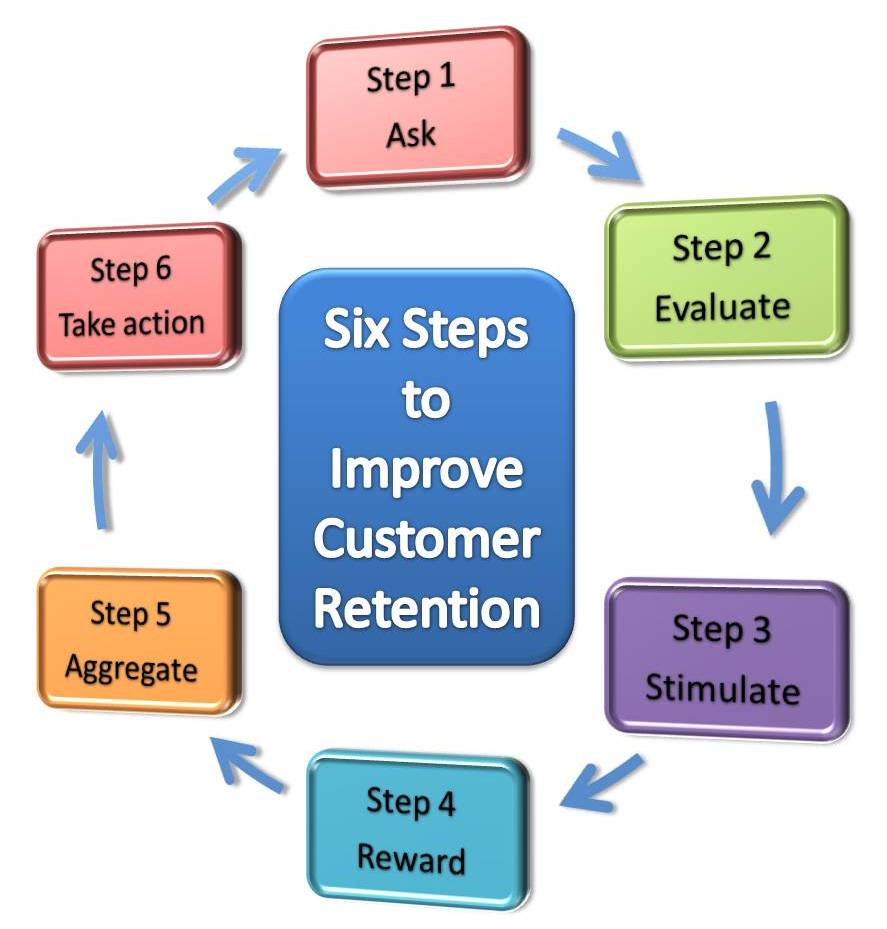 Customer retention is ultimately driven by value. Even the best segmentation, targeting, positioning, creative messaging or promotion with flawless execution will fall flat in the absence of value. In developing a plan to maintain and upgrade a customer base it is necessary then to build on solid foundation. Then, and only then will the steps unlock the door to greater customer retention and overall organizational success.
To succeed, customer retention must be a top-down, company-wide initiative. Truly committing to customer retention is hard work, because it affects virtually every aspect of your organization. But the ultimate payback in sustainable growth and profitability makes the effort worthwhile. The path to customer retention involves six key steps.
Step 1 Ask – Ask your customers what they want, what they like and don’t like. Include customer surveys on your Web site, at point-of-sale and in package inserts. You’ll likely get “extreme” feedback from customers who either love you or hate you. Customers who are mildly satisfied are not as motivated to speak their minds. But only ask if you’re prepared to deal with the responses. Turning a deaf ear to a problem is the kiss of death. Please remember that customers expect you to take action when they complain, especially if you initiated the dialog. Use feedback from your surveys to make improvements to your product or service. Customers love it when you listen to them!
Step 2 Evaluate – Evaluate your customer data to find out who your best customers are. This may sound like a big “duh”, but the devil is in the details. There may be trends that you’ve overlooked. And keep an eye on profitability, not just transactions. In the credit card world, a deep spender who pays off his balance each month is usually not as profitable as a moderate spender who carries a balance. When you know who your best customers are, you can tailor your marketing programs to keep those customers and encourage them to spend more with you.
Step 3 Stimulate – If you have sold your customer a service and they’re not using it, get them to activate. Examples: online bill pay; long-distance service; credit and debit cards. At the start of a new relationship, there’s that warm and fuzzy feeling when a customer signs on. You got them to say “yes.” Four months later you’re wondering why your customer doesn’t love you. Is it something you did? No. It’s something you didn’t do. You sold them and moved on. You assumed that the customer would fend for himself and figure out all the great things about doing business with you. The first few days/weeks of a new business relationship are critical. Shower them your kindness. Send direct mail and e-mail reminders. Thank them for their business. Do everything you can to make the “honeymoon” phase of your relationship special. In the long run, if they’re not using your product or service, they’re likely to bail when a better deal comes along.
Step 4 Reward – Reward your customers with meaningful perks for doing business with you. It seems like everyone has a loyalty program these days. Customers are getting weary of “me too” programs that don’t offer substantial value. Instead of always giving customers what they expect, give them the unexpected. For example, a mid size accounting firm rewarded some of its best customers a box of Haigh chocolates for their continued business. It was an unexpected tasty little perk that came out of the blue. Results? These customers had above average retention rates the following year. Sometimes the little things can mean a lot.
Step 5 Aggregate – Try to get all the customer’s eggs in your basket. In other words, cross-sell other products and services. It’s much easier because you already have a relationship with these customers. Offer “one-stop shopping”, consolidated billing, free postage and other benefits for giving you more of their business. Everyone’s busy, and consumers are looking for service providers who can make their lives easier. It’s what they want, so why not give it to them?
Step 6 Take action – Having a great product and great customer service are the foundation for customer retention. And positive word of mouth is by far the best marketing tool in your arsenal. But you can’t control when that happens, so you need a marketing plan to keep the customers you want. Don’t just hope your customers love you – be proactive. Put your plan in writing and make it stick. Follow through and take action. Use direct mail, e-mail, newsletters and other marketing tools to make your best customers feel special.
Treat your best customers with respect and they’ll reward you with loyalty beyond your wildest dreams. Send them targeted messages. Give them special incentives. Keep in mind that it’s easier to cultivate your existing customer relationships than to begin new ones. Not to mention less expensive.
The role of customer retention in the overall organizational strategy is one of protecting and managing the primary source of resources. It is also one of defending and enhancing market position and of optimizing resources and opportunity.
That is why although seemingly a purely tactical approach, customer retention also belongs to the realm of strategic market planning and is a required strength inherent to any successful organization.
It costs about five times as much to acquire a new customer as it does to keep a current customer. That’s why it pays to pay attention to your best customers. In the end, they’ll buy more, stick with you longer, and tell their friends how great it is doing business with your company. Isn’t that what we all want?
Customer retention is ultimately driven by value. Even the best segmentation, targeting, positioning, creative messaging or promotion with flawless execution will fall flat in the absence of value. In developing a plan to maintain and upgrade a customer base it is necessary then to build on solid foundation. Then, and only then will the steps unlock the door to greater customer retention and overall organizational success.
To succeed, customer retention must be a top-down, company-wide initiative. Truly committing to customer retention is hard work, because it affects virtually every aspect of your organization. But the ultimate payback in sustainable growth and profitability makes the effort worthwhile. The path to customer retention involves six key steps.
Step 1 Ask – Ask your customers what they want, what they like and don’t like. Include customer surveys on your Web site, at point-of-sale and in package inserts. You’ll likely get “extreme” feedback from customers who either love you or hate you. Customers who are mildly satisfied are not as motivated to speak their minds. But only ask if you’re prepared to deal with the responses. Turning a deaf ear to a problem is the kiss of death. Please remember that customers expect you to take action when they complain, especially if you initiated the dialog. Use feedback from your surveys to make improvements to your product or service. Customers love it when you listen to them!
Step 2 Evaluate – Evaluate your customer data to find out who your best customers are. This may sound like a big “duh”, but the devil is in the details. There may be trends that you’ve overlooked. And keep an eye on profitability, not just transactions. In the credit card world, a deep spender who pays off his balance each month is usually not as profitable as a moderate spender who carries a balance. When you know who your best customers are, you can tailor your marketing programs to keep those customers and encourage them to spend more with you.
Step 3 Stimulate – If you have sold your customer a service and they’re not using it, get them to activate. Examples: online bill pay; long-distance service; credit and debit cards. At the start of a new relationship, there’s that warm and fuzzy feeling when a customer signs on. You got them to say “yes.” Four months later you’re wondering why your customer doesn’t love you. Is it something you did? No. It’s something you didn’t do. You sold them and moved on. You assumed that the customer would fend for himself and figure out all the great things about doing business with you. The first few days/weeks of a new business relationship are critical. Shower them your kindness. Send direct mail and e-mail reminders. Thank them for their business. Do everything you can to make the “honeymoon” phase of your relationship special. In the long run, if they’re not using your product or service, they’re likely to bail when a better deal comes along.
Step 4 Reward – Reward your customers with meaningful perks for doing business with you. It seems like everyone has a loyalty program these days. Customers are getting weary of “me too” programs that don’t offer substantial value. Instead of always giving customers what they expect, give them the unexpected. For example, a mid size accounting firm rewarded some of its best customers a box of Haigh chocolates for their continued business. It was an unexpected tasty little perk that came out of the blue. Results? These customers had above average retention rates the following year. Sometimes the little things can mean a lot.
Step 5 Aggregate – Try to get all the customer’s eggs in your basket. In other words, cross-sell other products and services. It’s much easier because you already have a relationship with these customers. Offer “one-stop shopping”, consolidated billing, free postage and other benefits for giving you more of their business. Everyone’s busy, and consumers are looking for service providers who can make their lives easier. It’s what they want, so why not give it to them?
Step 6 Take action – Having a great product and great customer service are the foundation for customer retention. And positive word of mouth is by far the best marketing tool in your arsenal. But you can’t control when that happens, so you need a marketing plan to keep the customers you want. Don’t just hope your customers love you – be proactive. Put your plan in writing and make it stick. Follow through and take action. Use direct mail, e-mail, newsletters and other marketing tools to make your best customers feel special.
Treat your best customers with respect and they’ll reward you with loyalty beyond your wildest dreams. Send them targeted messages. Give them special incentives. Keep in mind that it’s easier to cultivate your existing customer relationships than to begin new ones. Not to mention less expensive.
The role of customer retention in the overall organizational strategy is one of protecting and managing the primary source of resources. It is also one of defending and enhancing market position and of optimizing resources and opportunity.
That is why although seemingly a purely tactical approach, customer retention also belongs to the realm of strategic market planning and is a required strength inherent to any successful organization.
It costs about five times as much to acquire a new customer as it does to keep a current customer. That’s why it pays to pay attention to your best customers. In the end, they’ll buy more, stick with you longer, and tell their friends how great it is doing business with your company. Isn’t that what we all want?
Customer retention is ultimately driven by value. Even the best segmentation, targeting, positioning, creative messaging or promotion with flawless execution will fall flat in the absence of value. In developing a plan to maintain and upgrade a customer base it is necessary then to build on solid foundation. Then, and only then will the steps unlock the door to greater customer retention and overall organizational success.
To succeed, customer retention must be a top-down, company-wide initiative. Truly committing to customer retention is hard work, because it affects virtually every aspect of your organization. But the ultimate payback in sustainable growth and profitability makes the effort worthwhile. The path to customer retention involves six key steps.
Step 1 Ask – Ask your customers what they want, what they like and don’t like. Include customer surveys on your Web site, at point-of-sale and in package inserts. You’ll likely get “extreme” feedback from customers who either love you or hate you. Customers who are mildly satisfied are not as motivated to speak their minds. But only ask if you’re prepared to deal with the responses. Turning a deaf ear to a problem is the kiss of death. Please remember that customers expect you to take action when they complain, especially if you initiated the dialog. Use feedback from your surveys to make improvements to your product or service. Customers love it when you listen to them!
Step 2 Evaluate – Evaluate your customer data to find out who your best customers are. This may sound like a big “duh”, but the devil is in the details. There may be trends that you’ve overlooked. And keep an eye on profitability, not just transactions. In the credit card world, a deep spender who pays off his balance each month is usually not as profitable as a moderate spender who carries a balance. When you know who your best customers are, you can tailor your marketing programs to keep those customers and encourage them to spend more with you.
Step 3 Stimulate – If you have sold your customer a service and they’re not using it, get them to activate. Examples: online bill pay; long-distance service; credit and debit cards. At the start of a new relationship, there’s that warm and fuzzy feeling when a customer signs on. You got them to say “yes.” Four months later you’re wondering why your customer doesn’t love you. Is it something you did? No. It’s something you didn’t do. You sold them and moved on. You assumed that the customer would fend for himself and figure out all the great things about doing business with you. The first few days/weeks of a new business relationship are critical. Shower them your kindness. Send direct mail and e-mail reminders. Thank them for their business. Do everything you can to make the “honeymoon” phase of your relationship special. In the long run, if they’re not using your product or service, they’re likely to bail when a better deal comes along.
Step 4 Reward – Reward your customers with meaningful perks for doing business with you. It seems like everyone has a loyalty program these days. Customers are getting weary of “me too” programs that don’t offer substantial value. Instead of always giving customers what they expect, give them the unexpected. For example, a mid size accounting firm rewarded some of its best customers a box of Haigh chocolates for their continued business. It was an unexpected tasty little perk that came out of the blue. Results? These customers had above average retention rates the following year. Sometimes the little things can mean a lot.
Step 5 Aggregate – Try to get all the customer’s eggs in your basket. In other words, cross-sell other products and services. It’s much easier because you already have a relationship with these customers. Offer “one-stop shopping”, consolidated billing, free postage and other benefits for giving you more of their business. Everyone’s busy, and consumers are looking for service providers who can make their lives easier. It’s what they want, so why not give it to them?
Step 6 Take action – Having a great product and great customer service are the foundation for customer retention. And positive word of mouth is by far the best marketing tool in your arsenal. But you can’t control when that happens, so you need a marketing plan to keep the customers you want. Don’t just hope your customers love you – be proactive. Put your plan in writing and make it stick. Follow through and take action. Use direct mail, e-mail, newsletters and other marketing tools to make your best customers feel special.
Treat your best customers with respect and they’ll reward you with loyalty beyond your wildest dreams. Send them targeted messages. Give them special incentives. Keep in mind that it’s easier to cultivate your existing customer relationships than to begin new ones. Not to mention less expensive.
The role of customer retention in the overall organizational strategy is one of protecting and managing the primary source of resources. It is also one of defending and enhancing market position and of optimizing resources and opportunity.
That is why although seemingly a purely tactical approach, customer retention also belongs to the realm of strategic market planning and is a required strength inherent to any successful organization.
It costs about five times as much to acquire a new customer as it does to keep a current customer. That’s why it pays to pay attention to your best customers. In the end, they’ll buy more, stick with you longer, and tell their friends how great it is doing business with your company. Isn’t that what we all want?
Customer retention is ultimately driven by value. Even the best segmentation, targeting, positioning, creative messaging or promotion with flawless execution will fall flat in the absence of value. In developing a plan to maintain and upgrade a customer base it is necessary then to build on solid foundation. Then, and only then will the steps unlock the door to greater customer retention and overall organizational success.
To succeed, customer retention must be a top-down, company-wide initiative. Truly committing to customer retention is hard work, because it affects virtually every aspect of your organization. But the ultimate payback in sustainable growth and profitability makes the effort worthwhile. The path to customer retention involves six key steps.
Step 1 Ask – Ask your customers what they want, what they like and don’t like. Include customer surveys on your Web site, at point-of-sale and in package inserts. You’ll likely get “extreme” feedback from customers who either love you or hate you. Customers who are mildly satisfied are not as motivated to speak their minds. But only ask if you’re prepared to deal with the responses. Turning a deaf ear to a problem is the kiss of death. Please remember that customers expect you to take action when they complain, especially if you initiated the dialog. Use feedback from your surveys to make improvements to your product or service. Customers love it when you listen to them!
Step 2 Evaluate – Evaluate your customer data to find out who your best customers are. This may sound like a big “duh”, but the devil is in the details. There may be trends that you’ve overlooked. And keep an eye on profitability, not just transactions. In the credit card world, a deep spender who pays off his balance each month is usually not as profitable as a moderate spender who carries a balance. When you know who your best customers are, you can tailor your marketing programs to keep those customers and encourage them to spend more with you.
Step 3 Stimulate – If you have sold your customer a service and they’re not using it, get them to activate. Examples: online bill pay; long-distance service; credit and debit cards. At the start of a new relationship, there’s that warm and fuzzy feeling when a customer signs on. You got them to say “yes.” Four months later you’re wondering why your customer doesn’t love you. Is it something you did? No. It’s something you didn’t do. You sold them and moved on. You assumed that the customer would fend for himself and figure out all the great things about doing business with you. The first few days/weeks of a new business relationship are critical. Shower them your kindness. Send direct mail and e-mail reminders. Thank them for their business. Do everything you can to make the “honeymoon” phase of your relationship special. In the long run, if they’re not using your product or service, they’re likely to bail when a better deal comes along.
Step 4 Reward – Reward your customers with meaningful perks for doing business with you. It seems like everyone has a loyalty program these days. Customers are getting weary of “me too” programs that don’t offer substantial value. Instead of always giving customers what they expect, give them the unexpected. For example, a mid size accounting firm rewarded some of its best customers a box of Haigh chocolates for their continued business. It was an unexpected tasty little perk that came out of the blue. Results? These customers had above average retention rates the following year. Sometimes the little things can mean a lot.
Step 5 Aggregate – Try to get all the customer’s eggs in your basket. In other words, cross-sell other products and services. It’s much easier because you already have a relationship with these customers. Offer “one-stop shopping”, consolidated billing, free postage and other benefits for giving you more of their business. Everyone’s busy, and consumers are looking for service providers who can make their lives easier. It’s what they want, so why not give it to them?
Step 6 Take action – Having a great product and great customer service are the foundation for customer retention. And positive word of mouth is by far the best marketing tool in your arsenal. But you can’t control when that happens, so you need a marketing plan to keep the customers you want. Don’t just hope your customers love you – be proactive. Put your plan in writing and make it stick. Follow through and take action. Use direct mail, e-mail, newsletters and other marketing tools to make your best customers feel special.
Treat your best customers with respect and they’ll reward you with loyalty beyond your wildest dreams. Send them targeted messages. Give them special incentives. Keep in mind that it’s easier to cultivate your existing customer relationships than to begin new ones. Not to mention less expensive.
The role of customer retention in the overall organizational strategy is one of protecting and managing the primary source of resources. It is also one of defending and enhancing market position and of optimizing resources and opportunity.
That is why although seemingly a purely tactical approach, customer retention also belongs to the realm of strategic market planning and is a required strength inherent to any successful organization.
It costs about five times as much to acquire a new customer as it does to keep a current customer. That’s why it pays to pay attention to your best customers. In the end, they’ll buy more, stick with you longer, and tell their friends how great it is doing business with your company. Isn’t that what we all want?
Customer retention is ultimately driven by value. Even the best segmentation, targeting, positioning, creative messaging or promotion with flawless execution will fall flat in the absence of value. In developing a plan to maintain and upgrade a customer base it is necessary then to build on solid foundation. Then, and only then will the steps unlock the door to greater customer retention and overall organizational success.
To succeed, customer retention must be a top-down, company-wide initiative. Truly committing to customer retention is hard work, because it affects virtually every aspect of your organization. But the ultimate payback in sustainable growth and profitability makes the effort worthwhile. The path to customer retention involves six key steps.
Step 1 Ask – Ask your customers what they want, what they like and don’t like. Include customer surveys on your Web site, at point-of-sale and in package inserts. You’ll likely get “extreme” feedback from customers who either love you or hate you. Customers who are mildly satisfied are not as motivated to speak their minds. But only ask if you’re prepared to deal with the responses. Turning a deaf ear to a problem is the kiss of death. Please remember that customers expect you to take action when they complain, especially if you initiated the dialog. Use feedback from your surveys to make improvements to your product or service. Customers love it when you listen to them!
Step 2 Evaluate – Evaluate your customer data to find out who your best customers are. This may sound like a big “duh”, but the devil is in the details. There may be trends that you’ve overlooked. And keep an eye on profitability, not just transactions. In the credit card world, a deep spender who pays off his balance each month is usually not as profitable as a moderate spender who carries a balance. When you know who your best customers are, you can tailor your marketing programs to keep those customers and encourage them to spend more with you.
Step 3 Stimulate – If you have sold your customer a service and they’re not using it, get them to activate. Examples: online bill pay; long-distance service; credit and debit cards. At the start of a new relationship, there’s that warm and fuzzy feeling when a customer signs on. You got them to say “yes.” Four months later you’re wondering why your customer doesn’t love you. Is it something you did? No. It’s something you didn’t do. You sold them and moved on. You assumed that the customer would fend for himself and figure out all the great things about doing business with you. The first few days/weeks of a new business relationship are critical. Shower them your kindness. Send direct mail and e-mail reminders. Thank them for their business. Do everything you can to make the “honeymoon” phase of your relationship special. In the long run, if they’re not using your product or service, they’re likely to bail when a better deal comes along.
Step 4 Reward – Reward your customers with meaningful perks for doing business with you. It seems like everyone has a loyalty program these days. Customers are getting weary of “me too” programs that don’t offer substantial value. Instead of always giving customers what they expect, give them the unexpected. For example, a mid size accounting firm rewarded some of its best customers a box of Haigh chocolates for their continued business. It was an unexpected tasty little perk that came out of the blue. Results? These customers had above average retention rates the following year. Sometimes the little things can mean a lot.
Step 5 Aggregate – Try to get all the customer’s eggs in your basket. In other words, cross-sell other products and services. It’s much easier because you already have a relationship with these customers. Offer “one-stop shopping”, consolidated billing, free postage and other benefits for giving you more of their business. Everyone’s busy, and consumers are looking for service providers who can make their lives easier. It’s what they want, so why not give it to them?
Step 6 Take action – Having a great product and great customer service are the foundation for customer retention. And positive word of mouth is by far the best marketing tool in your arsenal. But you can’t control when that happens, so you need a marketing plan to keep the customers you want. Don’t just hope your customers love you – be proactive. Put your plan in writing and make it stick. Follow through and take action. Use direct mail, e-mail, newsletters and other marketing tools to make your best customers feel special.
Treat your best customers with respect and they’ll reward you with loyalty beyond your wildest dreams. Send them targeted messages. Give them special incentives. Keep in mind that it’s easier to cultivate your existing customer relationships than to begin new ones. Not to mention less expensive.
The role of customer retention in the overall organizational strategy is one of protecting and managing the primary source of resources. It is also one of defending and enhancing market position and of optimizing resources and opportunity.
That is why although seemingly a purely tactical approach, customer retention also belongs to the realm of strategic market planning and is a required strength inherent to any successful organization.
It costs about five times as much to acquire a new customer as it does to keep a current customer. That’s why it pays to pay attention to your best customers. In the end, they’ll buy more, stick with you longer, and tell their friends how great it is doing business with your company. Isn’t that what we all want?
Customer retention is ultimately driven by value. Even the best segmentation, targeting, positioning, creative messaging or promotion with flawless execution will fall flat in the absence of value. In developing a plan to maintain and upgrade a customer base it is necessary then to build on solid foundation. Then, and only then will the steps unlock the door to greater customer retention and overall organizational success.
To succeed, customer retention must be a top-down, company-wide initiative. Truly committing to customer retention is hard work, because it affects virtually every aspect of your organization. But the ultimate payback in sustainable growth and profitability makes the effort worthwhile. The path to customer retention involves six key steps.
Step 1 Ask – Ask your customers what they want, what they like and don’t like. Include customer surveys on your Web site, at point-of-sale and in package inserts. You’ll likely get “extreme” feedback from customers who either love you or hate you. Customers who are mildly satisfied are not as motivated to speak their minds. But only ask if you’re prepared to deal with the responses. Turning a deaf ear to a problem is the kiss of death. Please remember that customers expect you to take action when they complain, especially if you initiated the dialog. Use feedback from your surveys to make improvements to your product or service. Customers love it when you listen to them!
Step 2 Evaluate – Evaluate your customer data to find out who your best customers are. This may sound like a big “duh”, but the devil is in the details. There may be trends that you’ve overlooked. And keep an eye on profitability, not just transactions. In the credit card world, a deep spender who pays off his balance each month is usually not as profitable as a moderate spender who carries a balance. When you know who your best customers are, you can tailor your marketing programs to keep those customers and encourage them to spend more with you.
Step 3 Stimulate – If you have sold your customer a service and they’re not using it, get them to activate. Examples: online bill pay; long-distance service; credit and debit cards. At the start of a new relationship, there’s that warm and fuzzy feeling when a customer signs on. You got them to say “yes.” Four months later you’re wondering why your customer doesn’t love you. Is it something you did? No. It’s something you didn’t do. You sold them and moved on. You assumed that the customer would fend for himself and figure out all the great things about doing business with you. The first few days/weeks of a new business relationship are critical. Shower them your kindness. Send direct mail and e-mail reminders. Thank them for their business. Do everything you can to make the “honeymoon” phase of your relationship special. In the long run, if they’re not using your product or service, they’re likely to bail when a better deal comes along.
Step 4 Reward – Reward your customers with meaningful perks for doing business with you. It seems like everyone has a loyalty program these days. Customers are getting weary of “me too” programs that don’t offer substantial value. Instead of always giving customers what they expect, give them the unexpected. For example, a mid size accounting firm rewarded some of its best customers a box of Haigh chocolates for their continued business. It was an unexpected tasty little perk that came out of the blue. Results? These customers had above average retention rates the following year. Sometimes the little things can mean a lot.
Step 5 Aggregate – Try to get all the customer’s eggs in your basket. In other words, cross-sell other products and services. It’s much easier because you already have a relationship with these customers. Offer “one-stop shopping”, consolidated billing, free postage and other benefits for giving you more of their business. Everyone’s busy, and consumers are looking for service providers who can make their lives easier. It’s what they want, so why not give it to them?
Step 6 Take action – Having a great product and great customer service are the foundation for customer retention. And positive word of mouth is by far the best marketing tool in your arsenal. But you can’t control when that happens, so you need a marketing plan to keep the customers you want. Don’t just hope your customers love you – be proactive. Put your plan in writing and make it stick. Follow through and take action. Use direct mail, e-mail, newsletters and other marketing tools to make your best customers feel special.
Treat your best customers with respect and they’ll reward you with loyalty beyond your wildest dreams. Send them targeted messages. Give them special incentives. Keep in mind that it’s easier to cultivate your existing customer relationships than to begin new ones. Not to mention less expensive.
The role of customer retention in the overall organizational strategy is one of protecting and managing the primary source of resources. It is also one of defending and enhancing market position and of optimizing resources and opportunity.
That is why although seemingly a purely tactical approach, customer retention also belongs to the realm of strategic market planning and is a required strength inherent to any successful organization.
It costs about five times as much to acquire a new customer as it does to keep a current customer. That’s why it pays to pay attention to your best customers. In the end, they’ll buy more, stick with you longer, and tell their friends how great it is doing business with your company. Isn’t that what we all want?